5 Key Factors to Consider in Your Fuel Card Comparison

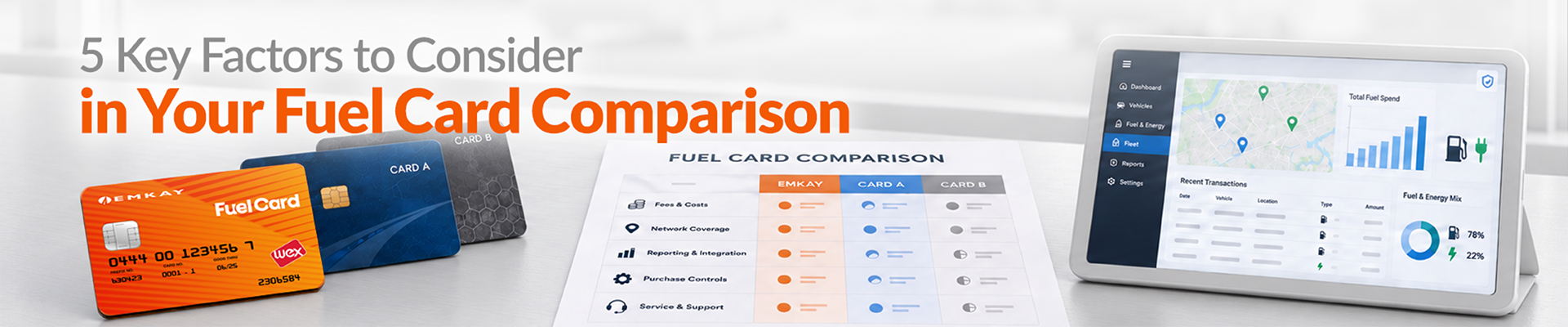
Fuel is one of the largest controllable line items in a fleet budget, and the card program used to manage it shapes how much of that spend a business can track, control, and recover with precision. A fuel card comparison is the process of weighing providers against the criteria that matter most for a given fleet: fee structure, network coverage, reporting depth, and the controls available to prevent misuse. For fleet managers overseeing a mix of sedans, vans, and work trucks, the right program does more than pay for gas at the pump. It feeds cost data into budgeting, flags anomalies, and reduces the administrative load of reconciling receipts.
The stakes of this decision scale with fleet size, but they exist even for a small operation. Fees accumulate without triggering an obvious red flag, out-of-network purchases erode the expected savings, and misuse goes unnoticed until a quarterly review turns up a pattern. A well-structured comparison catches these risks before a contract is signed.
Choosing a fuel card without a structured comparison tends to produce one of two outcomes. Either the fleet ends up paying fees it never fully understood, or it discovers gaps in acceptance and control only after a driver hits a station outside the network or makes a purchase the program should have blocked. Both problems are avoidable with a clear-eyed look at how providers differ. This guide walks through the factors that should drive a fuel card comparison, what separates strong programs from weak ones, and how to weigh the tradeoffs specific to your fleet's size and mix.
Factors to Consider in Fuel Card Comparison
Fees and Costs
Fee structure is where fuel card programs diverge most. A comparison should account for every layer of cost, not just the headline rate.
- Annual fees. Some providers charge a flat annual or per-card fee regardless of usage; others fold the cost into transaction pricing and charge nothing upfront. Neither model is inherently better, but a fleet running a small number of high-mileage vehicles will feel a per-card annual fee differently than one running a large, distributed fleet with intermittent fuel purchases. Ask for the fee schedule in writing and calculate it against your actual card count, not the provider's example scenario.
- Transaction fees. These can include per-transaction charges, out-of-network surcharges, and fees tied to specific payment rails. A card that looks inexpensive on paper can become costly if drivers regularly fuel outside the primary network and trigger surcharges on every fill-up. Request a breakdown of in-network versus out-of-network pricing before committing, and ask how the provider defines "in-network" for your specific service area.
- Acceptance and coverage. Fee structure only matters if the card works where your drivers operate day to day. A program with attractive pricing but thin coverage in your operating region will push drivers toward out-of-network stations, undermining the cost advantage. Map the provider's station network against your fleet's routes and service territories before making a decision, particularly for fleets that operate across multiple states or in rural areas where major fuel networks have gaps.

Reporting and Software Integration
Fee structure and network coverage get most of the attention in a fuel card comparison, but reporting quality often has a bigger long-term impact on cost control. A program that dumps transaction data into a static monthly statement forces someone on the fleet team to manually reconcile purchases against expected fuel usage, which is slow and prone to missed errors. Stronger programs push transaction data into a dashboard in near real time and flag purchases that fall outside a vehicle's expected pattern, such as a fuel volume that exceeds a given vehicle's tank capacity or a purchase logged outside normal operating hours.
Integration with existing fleet management or accounting software is worth confirming before signing a contract rather than after. A provider that claims broad integration support may only offer a generic data export rather than a direct connection to the platforms a given fleet already uses. Ask for a list of confirmed integrations, not just supported file formats, and involve whoever manages the fleet's telematics or accounting systems in the evaluation before a contract is finalized.
Top Fuel Card Comparisons
Fleet Fuel Card Comparison
A useful fleet fuel card comparison goes beyond a feature checklist. It weighs how each provider's strengths map to your fleet's operating profile. A regional service fleet with predictable routes has different priorities than a fleet with vehicles dispatched across a wide geographic footprint. The former may prioritize low transaction costs and simple reporting; the latter needs broad network coverage above almost everything else.
When you compare fleet card providers, look past the marketing copy to the operational details: how quickly can a lost or compromised card be deactivated, how granular is the reporting, and does the platform integrate with existing fleet management or accounting software. Providers vary widely in how much visibility they give fleet managers into real-time transaction data versus end-of-month statements. For a fleet actively managing fuel costs, real-time visibility is worth more than a marginally lower per-gallon fee.
Fuel and EV Charging
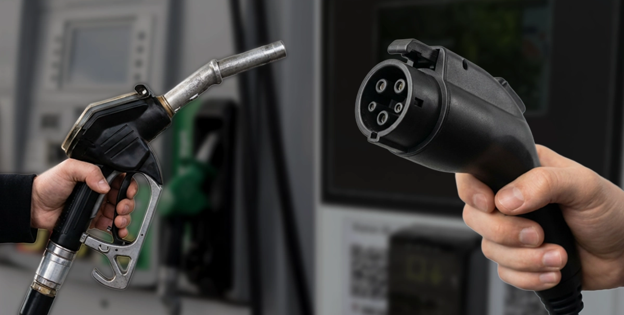
Fleets adding electric vehicles face a newer comparison point: which providers offer both fuel and EV charging on a single card or platform. As mixed fleets become more common, the ability to manage gasoline, diesel, and charging spend through one reporting system reduces administrative overhead considerably. Fleets that compare fleet card providers offering both fuel and EV charging should ask specifically about charging network coverage, since public charging infrastructure is far less consistent than the fuel station network most providers have built over decades. A card that handles EV charging well in one region may have limited support in another, so this is worth verifying against your fleet's actual electrification timeline rather than a provider's stated roadmap.
Purchase Limits and Controls
Purchase controls are the mechanism that turns a fuel card from a payment tool into a cost-management tool. Controls typically include daily or per-transaction spending caps, restrictions on fuel type or grade, limits on non-fuel purchases, and geographic or time-of-day restrictions tied to a vehicle's expected operating pattern.
For fleets that have dealt with card misuse in the past, the depth of these controls tends to matter more than any other factor. A card that only limits total dollar amount per day still allows a driver to buy snacks, car washes, or fuel for a personal vehicle up to that cap. A card that restricts purchases to fuel type and ties spending to a specific odometer reading or GPS location closes that gap. Fleets running mixed vehicle types, gasoline sedans alongside diesel work trucks, should confirm the provider can enforce fuel-grade restrictions per card rather than applying one rule fleet-wide, since a control system that can't distinguish between vehicle types creates the same blind spot it's meant to close.
Best Business Fuel Cards with Purchase Limits
The best business fuel cards with purchase limits and controls let a fleet manager set restrictions at the individual card or vehicle level rather than applying a single blanket policy across the fleet. This matters because a delivery van and a service truck have different fuel needs, and a one-size-fits-all limit either constrains legitimate purchases or leaves too much room for misuse. Look for providers that allow rule changes without a lengthy request process, since operational needs shift and a control system that requires days to update isn't responsive enough for day-to-day fleet management.
Fleet Fuel Card Reviews and Recommendations
Business Fuel Cards Reviews
Business fuel cards reviews from other fleet operators can surface issues that don't appear in a sales presentation: slow customer support response times, unexpected fee changes, or gaps in reporting accuracy. When reading reviews, weight feedback from fleets of a similar size and vehicle mix more heavily. A review praising a card's simplicity from a five-vehicle fleet may not translate to a two-hundred-vehicle operation with more complex reporting needs.
Customer Testimonials
Testimonials are useful for understanding how a provider performs in practice, but they should supplement a fuel card comparison rather than replace it. A testimonial reflects one fleet's experience under one set of conditions. Before weighting any single account too heavily, verify the claims against your own priorities: ask the provider directly about the specific pain points a testimonial addresses, whether that's onboarding speed, fraud response, or reporting accuracy, and request references from fleets operating in your region and vehicle class.
Providers select which testimonials to publish, so a published quote rarely reflects the full range of customer experience. Asking for a reference call, rather than relying on a published testimonial, gives a more complete picture: a direct conversation with another fleet manager can surface details about onboarding timelines, support responsiveness during disputes, and how the provider handled a fee dispute or coverage gap that a curated testimonial would never mention.
Conclusion
Summary of Key Factors
A sound fuel card comparison rests on four pillars: transparent fee structures, network coverage that matches where your fleet operates, purchase controls granular enough to fit vehicle-level needs, and reporting that gives fleet managers real visibility into spend. Fleets moving toward electrification should add a fifth factor, evaluating how well a provider's EV charging support matches its fuel network maturity.
Final Thoughts on Fuel Card Selection
The right fuel card program depends on fleet size, vehicle mix, and operating footprint, so no single provider is the universal top fuel card for every operation. The comparison process itself is what surfaces the right fit: gathering fee schedules, mapping network coverage against routes, testing the control settings a provider offers in practice, and checking reviews from comparable fleets. Fleets that treat fuel card selection as a one-time decision often revisit it within a year or two once fee changes or coverage gaps surface. Building the comparison criteria above into a recurring review, rather than a one-time evaluation, keeps the program aligned as the fleet's size, routes, and vehicle mix evolve.
For fleets weighing fuel card options alongside broader fleet management strategy, EMKAY's team can help evaluate how card programs fit into overall cost and vehicle management. Contact EMKAY at 630.250.7400 or info@emkay.com to discuss fuel program options for your fleet.