How to Choose the Right Trucks for Construction Fleets

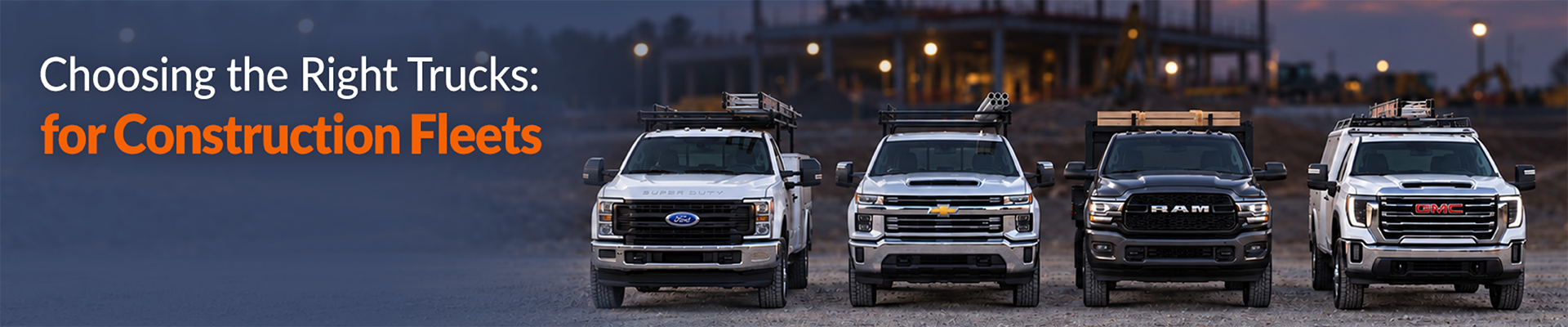
Picking the wrong truck for a construction fleet typically shows up gradually — in maintenance costs that creep up, in drivers pushing vehicles past their rated capacity, in uptime numbers that never quite hit target.
Construction fleets face higher stakes than most. The vehicles work harder, in harsher environments, on less predictable cycles than a typical corporate fleet. Getting the selection right means thinking past the spec sheet. This guide walks through the core decisions behind building a construction fleet that runs efficiently for longer.
Why Truck Selection Is One of the Most Consequential Construction Fleet Decisions
Every fleet vehicle purchase involves trade-offs. In construction, those trade-offs compound fast. An undersized truck gets asked to do work it wasn't built for. An oversized one burns more fuel and costs more to maintain. Neither mistake is cheap, and neither is obvious from the start. A mismatch shows up across the entire asset life cycle — unplanned downtime, accelerated wear, higher insurance exposure, earlier replacement. That's why truck selection deserves the same rigor as any other major capital decision, not a faster version of it.
Understanding Your Duty Cycle Before You Spec a Single Vehicle
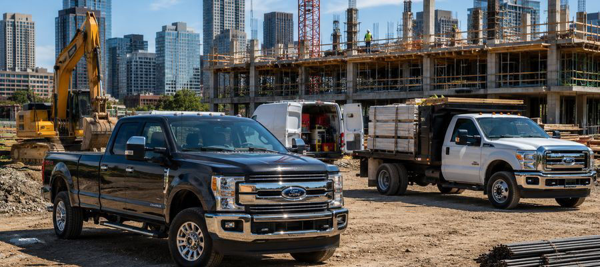
Before evaluating a single truck, define what it needs to do on a typical day — and on its worst day.
Payload Requirements: What the Job Demands Day to Day
A crew truck loaded with tools, materials, and a two- or three-person crew can carry more weight than the initial spec assumed. Add an upfit body or rack system on top of that, and the gap between the manufacturer's number and the truck's actual usable payload closes fast — sometimes by hundreds of pounds before a single tool goes in.
Map your actual payload demands by job type before committing to a truck class. Don't spec off the manufacturer's maximum payload figure alone — factor in your specific upfit configuration and typical load composition.
Towing Capacity vs. Highest Towing Capacity — Knowing Which Number Matters
Manufacturers publish maximum towing capacity under ideal conditions: flat ground, no wind, minimal cargo. For a construction fleet hauling an equipment trailer up a graded site access road, that number tells you almost nothing about how the truck will perform.
The truck with the highest towing capacity in its class isn't automatically the right pick — not if it comes with maintenance complexity or fuel costs your operation doesn't need. Make sure to spec toward your 80th-percentile haul, not the one heavy pull you make twice a year.
Terrain, Site Access, and the Limits of On-Road Specs
Highway-cycle testing doesn't tell you how a truck handles a muddy access road, a tight site turnaround, or a rutted grade. For fleets working across varied site conditions, four-wheel drive, ground clearance, and suspension rating are operational requirements, the same way payload capacity is.
Construction Fleet Vehicles: Matching Truck Class to Job Function
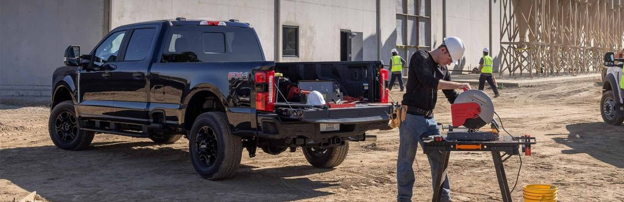
No single truck class covers every job in a construction fleet. The goal is a purposeful mix, built around function.
Light-Duty Pickups
Half-ton trucks carry the bulk of daily construction fleet work: site visits, tool and parts runs, moving people between locations. Their combination of payload, maneuverability, and fuel economy makes them the right call for high-frequency, moderate-load use.
When evaluating light-duty trucks, prioritize reliability track record, parts availability in your operating region, and upfit compatibility — especially if you're running a standardized rack or storage configuration across the fleet.
When to Move to Medium-Duty
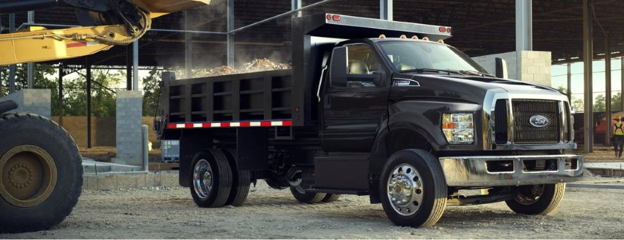
Move to medium-duty (Classes 4–6) when payload or towing demands consistently exceed what a half-ton can handle, or when the job calls for a vocational configuration a light-duty chassis can't support.
Medium-duty trucks bring a higher GVWR, drivetrains built for sustained heavy use, and more upfitting flexibility. In exchange: higher acquisition cost, higher fuel consumption, and in some markets, a smaller pool of qualified drivers.
Comparing Truck Sizes Across Crew and Cargo Configurations
Crew cab vs. regular cab, short bed vs. long bed, single rear wheel vs. dual rear wheel — these choices shape daily utility and upfit options. A few rules of thumb hold across most construction fleets:
- Crew cabs make sense where personnel transport is part of the job; they're less efficient for pure cargo work
- Long beds give more room for built-in storage and cargo upfits
- Dual rear wheel configurations support higher payload ratings but lose maneuverability on tight job sites
Focus on standardizing configurations within a job function, not across the whole fleet. That will reduce training variability and simplify maintenance — a fleet-wide standard just forces the wrong truck onto some jobs.
Fleet Vehicle Upfitting for Construction: Where Spec Meets Real-World Use
Upfitting is what happens after the factory build — modifying the truck to match the job it's actually going to do.
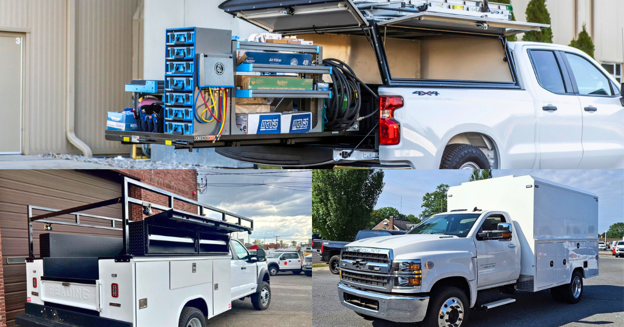
What Does an Upfitter Do for Commercial Vehicles?
A commercial vehicle upfitter installs what the base truck doesn't come with: service bodies, storage systems, ladder racks, utility beds, crane systems, specialized equipment mounts. An experienced fleet upfitter knows how upfit weight eats into payload rating, how body configuration interacts with vehicle warranty terms, and how to build for years of hard use.
Common Upfit Configurations for Construction Fleets
The right configuration depends on job function. Common ones across construction fleets:
- Service bodies for mechanics, maintenance, and equipment repair trucks — organized storage, lockable compartments, sometimes crane or lift capacity
- Flatbed or stake bodies for material transport, where load access matters more than enclosed storage
- Ladder and pipe racks for trades vehicles where specialty material transport is the primary job
- Tool management systems for supervisor and field superintendent trucks, where security and organization outrank raw cargo capacity
Commercial Fleet Upfitting Costs and How They Affect TCO
Upfit costs range from a few thousand dollars for a basic rack system to $20,000 or more for a fully built-out service body. That cost needs to be in the TCO calculation from the start. Upfit decisions also shape resale value, maintenance complexity, and how easily the fleet can standardize over time. Fleets that treat upfitting as a strategic decision — defined configurations by job type, consistent vendor relationships, planned replacement cycles — consistently come out ahead of fleets that treat each upfit as a one-off.
Reliability, Maintenance, and Total Cost of Ownership
Acquisition cost gets the most attention in truck selection. But it's rarely the number that matters most.
Most Reliable Truck Engines for High-Mileage Fleet Use
Engine choice is a long-term bet. Construction trucks rack up mileage fast under sustained load, so reliability and parts availability matter more here than peak horsepower ever will.
Diesel still dominates medium- and heavy-duty construction applications for its torque and durability under towing load. But in light-duty trucks, the gap has narrowed — modern gas V8 and turbocharged V6 engines now come close on longevity while costing less upfront and requiring less specialized maintenance infrastructure.
What to check: documented performance past 150,000 miles in fleet use, parts and service availability in your region, and failure modes that don't always show up in manufacturer specs or consumer reviews.
When to Replace Fleet Vehicles vs. Repair Them
The replace-or-repair call is one of the most consequential decisions in fleet management. A few signals typically tip it toward replacement:
- Repair costs exceeding 50–60% of the vehicle's current market value in a single cycle
- Reliability decline that puts time-sensitive project schedules at risk
- Safety system obsolescence, as ADAS features become standard on newer platforms
- Upfit incompatibility, once a job function's requirements have shifted
Fleet managers tracking cost-per-mile by vehicle make this call with data instead of gut instinct.
Managing Construction Fleet Vehicles with the Right Software
Selecting the vehicle is a one-time decision. Managing it well is a daily one, and it needs the right tools.
How Construction Fleet Management Software Closes Visibility Gaps
Construction fleets have a structural visibility problem: vehicles scattered across active job sites, with maintenance, location, and utilization data split across disconnected systems — or not captured at all.
The strongest platforms bring GPS tracking, maintenance, driver behavior monitoring, fuel data, and asset utilization into one view — so fleet managers can act on what's happening. For construction fleets specifically, tracking assets across sites, flagging idle time that quietly drains fuel budget, and catching vehicles approaching maintenance thresholds before they become downtime events isn't a nice-to-have. It's the difference between managing the fleet and reacting to it.

Making the Final Call: A Decision Framework for Fleet Managers
Truck selection for a construction fleet doesn't reduce to one right answer — it depends on your specific operation. But a consistent framework cuts through the noise.
- Define the duty cycle first. Before evaluating any vehicle, document payload, towing, terrain, and daily use requirements for each job function in your fleet. Everything else follows from this.
- Match truck class to function, not familiarity. Resist defaulting to whatever the fleet has always run if the job requirements have changed. A light-duty truck pushed past its design envelope costs more to maintain and fails sooner.
- Treat upfitting as part of the vehicle spec, not an add-on. The base truck and the upfit are one asset. Evaluate them together, cost them together, plan their replacement together.
- Build reliability and TCO into the selection criteria. Acquisition cost matters. Cost-per-mile over the vehicle's operational life is the number that tells you whether the decision was right.
- Use data to manage what you've selected. The best truck selection is only as good as the maintenance and utilization management behind it. Construction fleet management software isn't a luxury — it's the infrastructure that makes the rest of the investment defensible.
Construction fleets that get truck selection right cut costs, reduce friction, decrease safety risk, and increase driver confidence. That's worth getting right upfront.