Does Toyota Make a Cargo Van? What Fleet Managers Should Know About Toyota Commercial Vehicles

Search for a Toyota cargo van and you'll find dealer pages, used listings, and forum threads asking the same question. Fleet managers ask for good reason; toyota has a long record for reliability and resale value, and many fleets already run Toyota pickups, sedans, and SUVs. Adding a van from the same brand would keep service, parts, and purchasing simpler.
The short answer is that Toyota does not sell a cargo van in the United States. But that doesn't take Toyota out of the conversation for work fleets. This guide covers why the van gap exists, which Toyota commercial vehicles fit service and sales fleets, how Toyota's fleet program works, and which cargo vans fleets typically pair with a Toyota lineup.
Does Toyota make a cargo van?
No. For the 2027 model year, Toyota's U.S. lineup includes no cargo van, full-size passenger van, or cutaway chassis. The closest model is the Sienna minivan, covered below.
Toyota does build vans for other markets. The HiAce is the best-known. It has been in production since the late 1960s and works as a cargo hauler, passenger shuttle, and ambulance platform across Asia, Australia, Africa, and Latin America. Reports from Japan point to a next-generation HiAce with a hybrid option arriving in late 2026 or early 2027, with no announced plans for North America.
Three factors keep the HiAce out of the U.S.:
- The chicken tax. A 25% U.S. tariff on imported light trucks and vans has been in place since the 1960s. Building the van overseas and shipping it here would make it hard to price against domestic competitors.
- Safety and emissions rules. The current HiAce isn't engineered to meet U.S. standards, and federal import rules keep foreign-market vehicles off U.S. roads until they are 25 years old.
- A crowded segment. Ford, Ram, Mercedes-Benz, and GM have held the U.S. full-size van market for decades, backed by established upfitter networks. Toyota sold a compact van here in the 1980s, then shifted to minivans with the Previa and later the Sienna.
Used HiAce vans do appear in U.S. listings. These are older imports that cleared the 25-year rule. They rarely suit a managed fleet because parts availability, service coverage, and resale value are hard to predict.
Toyota work trucks: Tacoma and Tundra
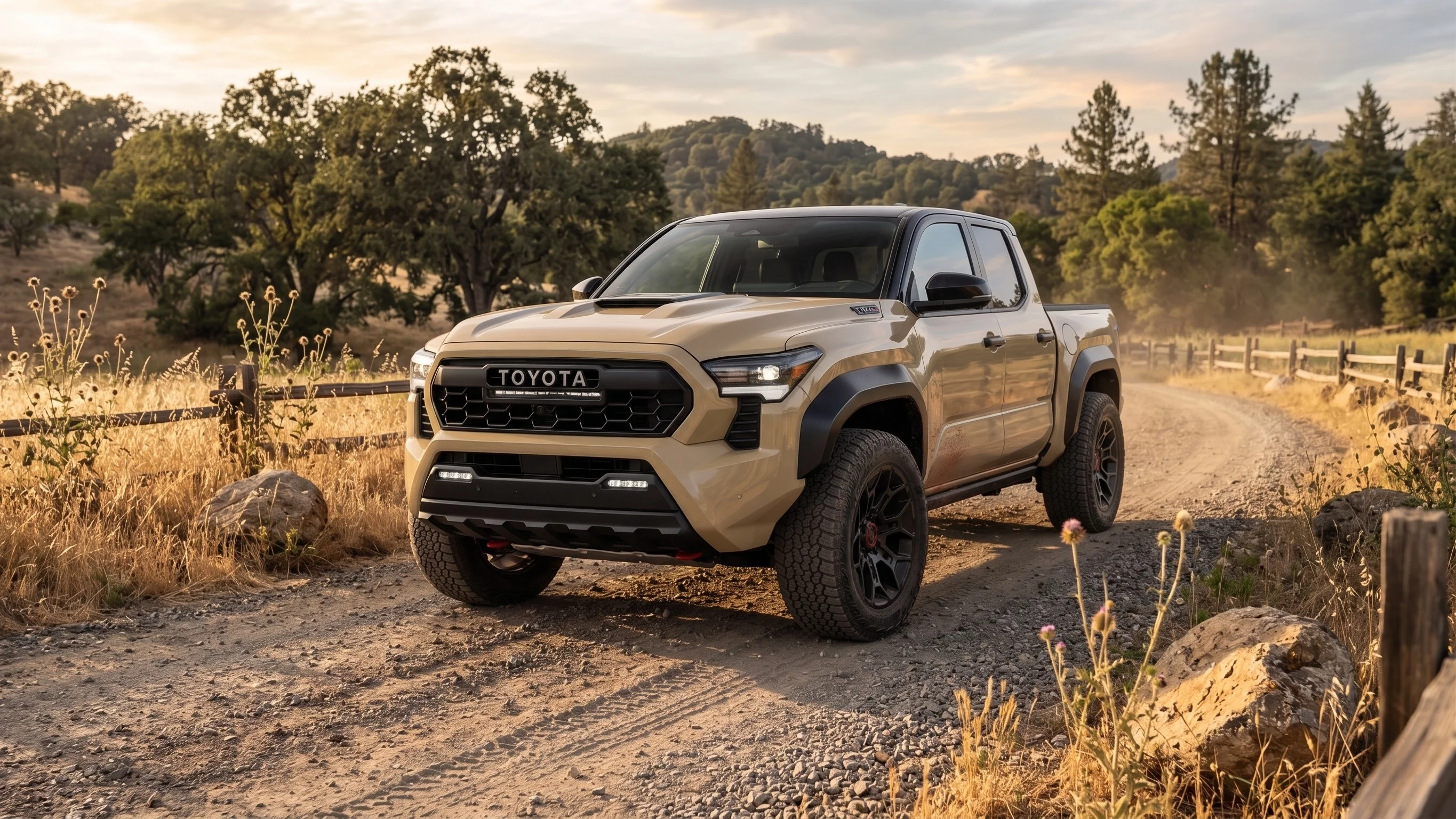
Toyota's commercial strength in the U.S. is its pickups. The Tacoma and Tundra both qualify for Toyota's commercial fleet incentives, and both regularly show up in service, construction, utility, and field sales fleets.
Tacoma
The Tacoma is a midsize pickup. The current generation uses a turbocharged four-cylinder, with the i-FORCE MAX hybrid available on select trims. It fits fleets that need a bed and moderate towing without the size and fuel cost of a full-size truck. Property managers, inspectors, landscaping crews pulling small trailers, and technicians who mostly carry tools and parts are common users.
A midsize truck also handles tighter job sites and parking garages more easily. The Tacoma has a long reputation for holding its value, which matters when you calculate total cost of ownership over a three- to five-year cycle.
Tundra
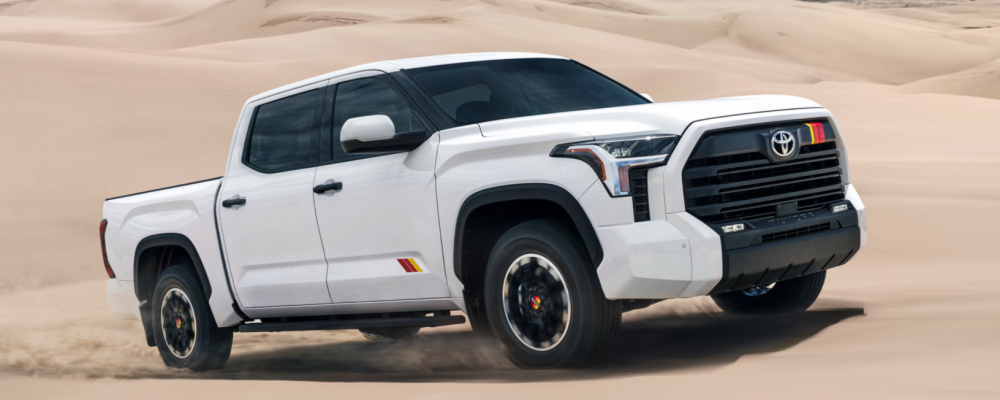
The Tundra is Toyota's full-size pickup. It runs a twin-turbo V6 in standard i-FORCE or hybrid i-FORCE MAX form. It suits crews that tow heavier equipment, carry more payload, or need a crew cab with room for several workers.
One limit to plan around: Toyota does not offer a heavy-duty 2500 or 3500 pickup in the U.S. Fleets that tow large equipment trailers or run service bodies near the top of payload ratings will usually look at Ford Super Duty, Ram HD, or Silverado and Sierra HD trucks for those roles.
Upfitting Toyota trucks
Both trucks accept common upfits, including ladder racks, toolboxes, bed slides, drawer systems, and auxiliary lighting. Confirm with your upfitter that the equipment works with the truck's payload rating and bed dimensions, since midsize beds limit some systems built for full-size trucks. Toyota also doesn't offer a cab-chassis configuration in the U.S., so service bodies and flatbeds take more custom work than on domestic trucks built for them.
Toyota fleet cars and SUVs
For fleets built around people more than payload, Toyota's hybrid lineup is the main draw. Sales reps, home health providers, inspectors, and account managers drive high annual mileage, and fuel is one of the largest line items in those fleets.
Models that commonly appear in corporate fleets:
- Camry: Midsize sedan, hybrid-only in the current generation. A frequent pick for sales teams that spend long days on the highway.
- Corolla and Corolla Hybrid: Efficient and easy to park, suited to urban territories and entry-level roles.
- Prius: The highest fuel economy in the lineup, with a plug-in version for drivers who can charge at home or at the office.
- RAV4: Small SUV offered as a hybrid or plug-in hybrid, with all-wheel drive. Popular where drivers face snow, gravel roads, or rural territories.
- Grand Highlander: Three-row SUV for roles that carry samples, displays, or more than one passenger.
Hybrids give fleets that aren't ready for full EVs a practical middle step. Drivers fuel up the way they always have, the organization needs no charging infrastructure, and fuel savings start on day one. For fleets further along in electrification, Toyota's battery-electric bZ and the new Highlander BEV also qualify for commercial fleet incentives.
How Toyota's fleet program works
Toyota sells to fleets through a dedicated fleet program that pays incentives to qualifying businesses, government agencies, and some nonprofits. Details change each model year, so confirm them on Toyota's fleet site before ordering. For the 2027 model year, the commercial program works like this:
- Register for a fleet ID. Businesses register through Toyota's fleet portal to receive a Fleet Identification number (FID) or Customer Identification number (CID). Registration doesn't guarantee production allocation, and Toyota is prioritizing existing partners based on order history.
- Confirm eligibility. Commercial incentives require at least 10 vehicles in service, and each vehicle has to stay in service in the U.S. for 12 months. Pre-approval may be required. Lease companies qualify when ordering on behalf of a qualified fleet customer.
- Check availability and timing. Toyota publishes an ordering schedule with estimated first order dates and first delivery months for each model. Build those windows into your replacement plan.
- Order through a participating dealer. Incentives are paid as invoice credits to the selling dealer, and an assigned Fleet Field Manager handles program questions.
- Keep vehicles in service. Toyota may charge back incentives if a vehicle is sold or exported early, registered to the wrong entity, or ordered under the wrong program.
Two more details for 2027: fleet price assurance isn't offered, and Toyota reimburses the delivering dealer for a full tank of fuel on commercial orders. Separate programs cover government and utility fleets, livery operators, and rental licensees, each with its own eligible model list.
Cargo van alternatives for Toyota fleets
Most fleets that run Toyota cars and trucks source cargo vans from another manufacturer. Four full-size vans cover nearly all of the U.S. market, and each suits different work.
| Van | Body options | Electric version | Typical fleet fit |
|---|---|---|---|
| Ford Transit | Three lengths, three roof heights, cutaway and chassis cab | E-Transit | Plumbing, HVAC, electrical, and delivery; the widest upfitter support |
| Ram ProMaster | Multiple lengths and roof heights, front-wheel drive, low load floor | ProMaster EV | Stop-and-go delivery and service routes where easy loading matters |
| Mercedes-Benz Sprinter | Multiple lengths and roof heights, cab chassis, all-wheel drive available | eSprinter | High-roof shelving, mobile workshops, long service routes |
| Chevrolet Express / GMC Savana | Two lengths, standard roof, cutaway | None | Heavier towing and payload on a body-on-frame platform |
A few factors shape the choice:
- Roof height. High-roof vans let technicians stand inside and fit taller shelving, which matters for roles that work out of the van all day.
- Drivetrain. Front-wheel drive gives a lower load floor. Rear- and all-wheel drive suit heavier towing and poor-weather territories.
- Upfit lead times. Shelving, partitions, and racks add weeks to delivery. Ordering vans and upfits together keeps vehicles from sitting on a lot.
- Service network. Check dealer coverage across your territories. A van that's down waiting for parts can cost more than any difference in acquisition cost between models.
Building a mixed fleet around Toyota
Running Toyota cars and trucks alongside another brand's vans is common, and it works well with a few practices in place.
- Match the vehicle to the role first. Start with what each driver carries, where they drive, and how many miles they log. Brand consistency comes second.
- Standardize within each vehicle class. One van model and one pickup model per role simplifies upfit specs, parts, and driver training, even when the two come from different manufacturers.
- Compare total cost of ownership. Acquisition is one piece. Fuel, maintenance, insurance, downtime, and resale often decide which model costs less over its time in the fleet. Toyota hybrids and pickups tend to score well on fuel and resale.
- Align replacement cycles with order windows. Toyota's fleet ordering schedule and van upfit lead times both affect when new vehicles arrive. Plan around them so drivers aren't left in aging units.
- Keep data in one place. Mixed-brand fleets need a single view of maintenance, fuel, and lifecycle costs so you can compare models fairly.
Toyota commercial vehicle FAQs
Does Toyota make a work van?
Not for the U.S. market. Fleets that want a Toyota for light cargo usually choose the Sienna. Fleets that need shelving, partitions, or standing room choose a full-size van from another manufacturer.
Can you buy a new Toyota HiAce in the U.S.?
No. The HiAce isn't certified to U.S. safety and emissions standards, and federal rules allow foreign-market vehicles in only after they turn 25 years old. Used imports exist, though they are hard to support in a managed fleet.
What's the best Toyota work truck?
It depends on the job. The Tacoma suits lighter loads, tight job sites, and drivers who log a lot of miles. The Tundra suits crews that tow heavier equipment or need more cab space. Neither replaces a heavy-duty pickup for the largest loads.
Is Toyota fleet pricing available to small businesses?
Toyota's commercial fleet incentives start at 10 vehicles in service. Smaller operations can still work with a dealer's commercial department on business purchases, but the formal incentive program applies once a fleet reaches that size.
The bottom line
Toyota doesn't sell a cargo van in the U.S., and nothing announced so far suggests that will change soon. Toyota still earns a place in many work fleets through the Tacoma, Tundra, Sienna, and a hybrid lineup built for high-mileage drivers. Pairing those vehicles with a Transit, ProMaster, Sprinter, or Express covers every role in the fleet.
EMKAY helps fleets spec, acquire, upfit, and manage vehicles from every major manufacturer, including Toyota. To talk through your next replacement cycle, call 630.250.7400 or visit emkay.com.