7 Essential Tips for Choosing the Best Cargo Van Shelving and Ladder Racks

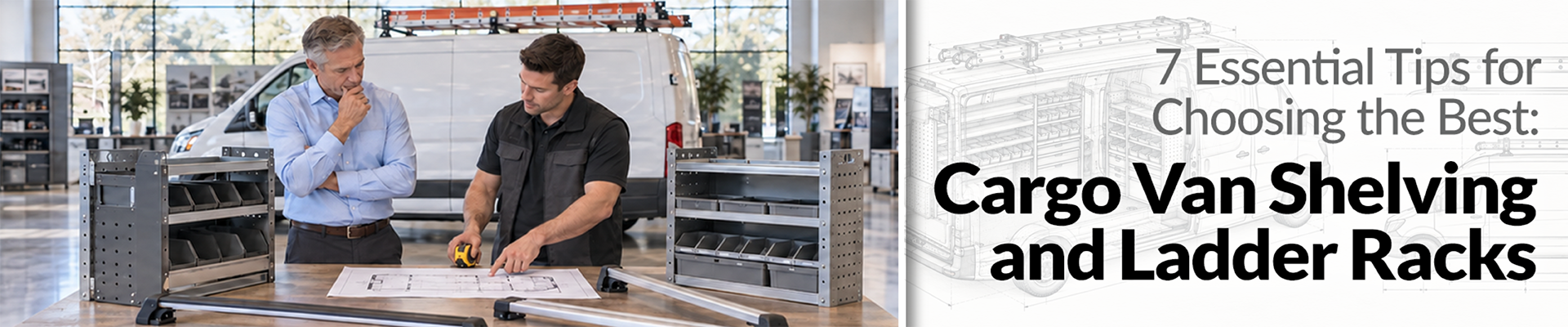
A cargo van is a rolling workspace, and its interior layout shapes how each job goes. Tools piled on the floor slow every task. Loose materials shift under braking, and constant digging through clutter wears out both gear and patience. Across a fleet of dozens or hundreds of vans, those small losses compound into longer job times, damaged inventory, avoidable safety exposure, and interior damage that surfaces when the van is remarketed.
A well-planned interior solves several of these problems at once.
Overview of Cargo Van Shelving and Ladder Racks
Cargo van shelving and ladder racks anchor most van equipment packages. Shelving units, drawers, and bins organize the cargo area, while roof-mounted or interior ladder racks carry long items so the floor stays usable. Buyers can choose from off-the-shelf van storage systems, vocation-specific packages, and fully custom builds. The seven tips below cover how to evaluate each option through a fleet operations lens.
Tip 1: Assess Your Storage Needs
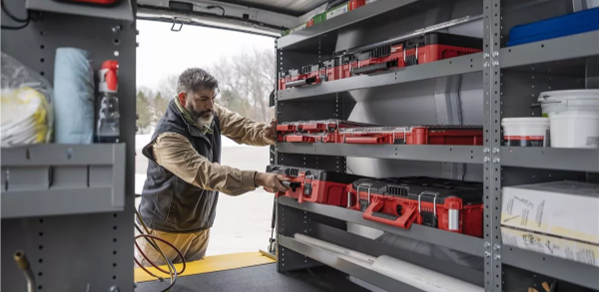
Every great specification starts with an inventory of what the van carries and the space available to carry it.
Evaluating Van Size and Configuration
Van interiors vary by make, roof height, and wheelbase.
A low-roof, regular-wheelbase van offers a fraction of the usable volume found in a high-roof extended model, and shelving is engineered around wheel wells, wall ribs, and factory anchor points that differ between make and models. Confirm the exact make, model year, roof height, and wheelbase before requesting quotes so every component arrives model-specific.
It isn’t just about usable volume though. Access matters just as much. Side-door and rear-door openings determine which shelves a technician can reach without climbing inside, and a bulkhead partition takes cargo depth from the front of the van. For mixed van rosters, document each configuration and plan how equipment will transfer to replacement vehicles at the end of the lease.

Identifying Equipment and Tools
List what each role carries, the dimensions and weight of the heaviest items, and how often each item gets used. Frequently used tools belong at reachable heights near a door, while heavy items sit near the floor.
Long stock such as ladders, conduit, and pipe needs a home outside the shelving footprint, which is where roof racks come in.
Talk to drivers from each trade, since they know what a typical day demands. Then standardize by role so that every HVAC, electrical, plumbing, or delivery van receives one approved layout.
Tip 2: Understand Different Van Shelving Systems
Commercial Van Shelving Options
Commercial van shelving falls into a few families.
- Fixed van shelving units bolt in place and deliver the highest rigidity for heavy, dense items.
- Folding or drop-down shelving collapses to free floor space when the van needs to haul bulky loads.
- Drawer units and modular bins keep small parts sorted and protected.
Many manufacturers bundle these components into contractor van shelving packages which shortens the specification process.
Custom Van Shelving Solutions
Custom van shelving earns its place when a fleet carries specialized equipment that standard packages cannot hold, such as oddly sized instruments or regulated materials. The tradeoff can mean longer lead times, engineering fees, and a higher per-unit cost. A practical middle path is to adopt a small set of standard configurations and reserve custom design for the few roles that need it. Fewer configurations simplify purchasing, speed up driver training, ease parts stocking, and make vans interchangeable.
Tip 3: Explore Cargo Van Accessories
Accessories for Enhanced Functionality
Cargo van accessories fill the gaps that shelving leaves open.
- A partition separates the driver from the cargo area and stops items from traveling forward in a hard stop.
- Floor and wall liners protect the van body and simplify cleanup.
- Tie-down rails and straps secure loads that do not fit on shelves.
- Interior lighting makes deep bins and back corners easy to see.
- Tank holders or material clamps give awkward items a fixed position.
Together, this cargo van equipment turns a bare interior into a workspace with a place for everything.
Cargo Van Shelving Accessories
Cargo van shelving accessories refine the shelves themselves.
- Retention lips and bars keep contents in place over rough roads.
- Adjustable dividers customize shelf space
- Drawer locks or door panels secure contents with the van parked.
- Cargo van racks and bins in matched sizes speed up restocking
Check compatibility before ordering, since mounting patterns and dimensions differ between manufacturers.
Tip 4: Prioritize Durability and Material Quality
Comparing Material Options
Van storage equipment generally comes in three material families.
- Steel is strong and rigid, and it is typically the heaviest choice, so coated or galvanized finishes matter for corrosion resistance, particularly where roads are salted in winter.
- Aluminum weighs less and resists corrosion naturally, usually at a higher purchase price.
- Composite and polymer components, common in panels, drawers, and bins, resist dents and rust while keeping weight low.
The right pick depends on the load, the climate, and how much payload margin the van has to spare.
Evaluating Load Capacity
Every shelf and rack carries a load rating, and the combined weight of the shelving, tools, and materials must stay inside the van's payload rating. A full shelving system adds meaningful weight before any tool goes on board, so lighter materials can pay for themselves in vans that run near their limits.
Ask suppliers for per-shelf ratings and for documentation on how the mounting hardware was tested against the vehicle manufacturer's attachment points. Some manufacturers publish durability and impact test results, which gives fleet managers something concrete to compare. Weight also touches fuel economy, so a heavy setup costs money on every mile driven.
Tip 5: Investigate Utility Van Racks
Types of Van Racks and Their Benefits
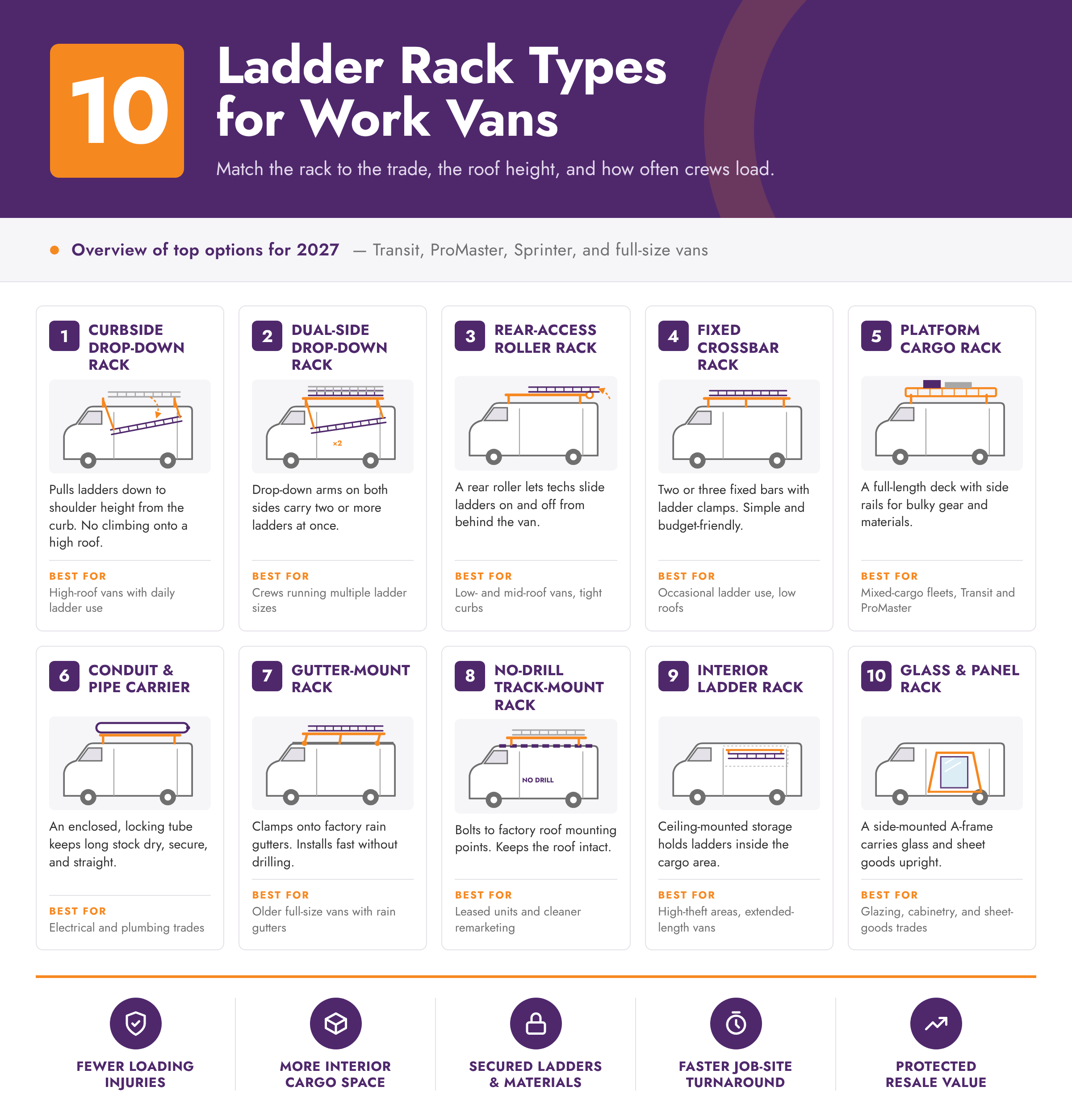
Utility van racks come in several forms, but van ladder racks are the most common.
- Fixed roof designs use cross-members and load stops to carry ladders, conduit, and pipe. Drop-down versions lower the load to a reachable height and reduce lifting strain.
- Interior ladder racks keep equipment out of the weather and out of sight, though they consume some interior length.
- Pipe carriers and material holders extend the options for trades that haul long stock.
Commercial van racks free up floor space and secure long items. Pairing van racks and shelving leaves the interior for tools and parts. Before buying, check the roof load rating, the clearance needed for parking structures and job sites, and how the rack affects wind drag and fuel economy. Roof vents, lights, and antennas may also limit where crossbars can mount.
Choosing Between Fixed and Adjustable Racks
Fixed racks are simpler, lighter, and easier to maintain because they have fewer moving parts. They suit roles where every van carries a similar load.
On the other hand, adjustable and drop-down racks give flexibility for mixed loads and take much of the effort out of getting a ladder onto a high-roof van. But those benefits come with more mechanical parts to inspect over time.
Match the choice to how consistent the load is, how tall the van is, and how much lifting the driver group can safely handle.
Tip 6: Maintenance Tips for Longevity
Build your system into the routine vehicle inspection. Consider the following:
- Check fasteners and mounting points for looseness.
- Look for corrosion or cracks at welds and rack feet.
- Test latches and folding hinges.
- Confirm that retention lips and straps are intact.
- Regular cleaning to remove debris and moisture that speed up wear.
After any collision, even a minor one, have the mounting points inspected before the van returns to service. A short inspection log helps recurring problems surface in the data, and standardized hardware keeps replacement parts easy to stock.
Tip 7: Budgeting for Cargo Van Shelving and Ladder Racks
Cost Factors in Van Storage Systems
Pricing for van storage systems shifts with material, van-specific engineering, the number of drawers and bins, rack design, accessories, and installation labor. Time in the shop counts as a cost, and heavier systems can trim payload and fuel economy. Evaluate the full picture across the van's service life: durability, reuse across vehicles, technician time saved, and the condition of the interior at remarketing. A comparison built only on purchase price leaves the largest numbers out.
Finding Deals on Cargo Van Shelving for Sale
Cargo van shelving for sale appears at upfitters, truck equipment dealers, manufacturers, and online marketplaces. Fleet buyers can unlock volume pricing by consolidating orders around a few standard packages. Request quotes from several suppliers using the same specification sheet so comparisons are like for like.
Look for model-specific fit, published load ratings, mounting documentation, and clear warranty terms, since a low price without those details carries risk. Ask about lead times as well, because installation backlogs can delay in-service dates. Timing installation with new vehicle delivery avoids a second trip to the shop.
Conclusion
Choosing the right cargo van shelving and ladder racks begins with a clear picture of the van, the tools, and the people using them. From there, match the system type to the work, add accessories that fit the layout, and confirm materials and load ratings against the van's payload. Select racks that suit the loads and the drivers lifting them, plan for professional installation with regular inspections, and budget across the whole service life of the vehicle.
Van interiors are among the more accessible efficiency gains in a service fleet. A pilot configuration on a handful of vans, followed by driver feedback, gives a low-risk path to a standard that scales.
Why "Everyone Speeds" Is a Policy Problem, Not Just a Driver Problem
For fleets, background behavior is the kind of risk that's hardest to manage, because it doesn't show up as a single bad decision. It shows up as a pattern spread across dozens or hundreds of drivers, each one making a small, unremarkable choice that adds up.
Top Fleet Management Companies: A Buyer's Guide to Commercial Fleet Leasing
Organizations need to choose their fleet management carefully; a fleet management provider can begin a decade-long relationship. The right provider reduces your fleet acquisition costs, improves your driver experience, and helps your organization solve tactical and strategic challenges. The wrong one shows up as friction you feel for years.